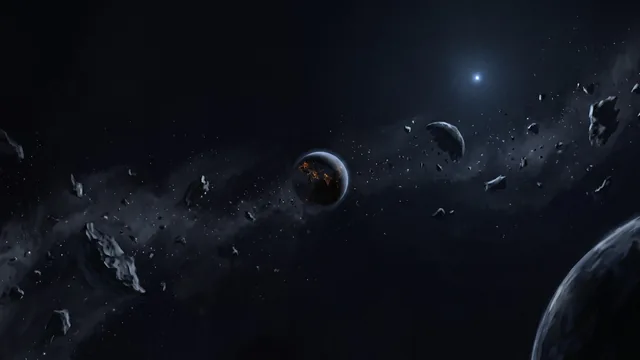
Last Light
Be the only civilization left with a colony.
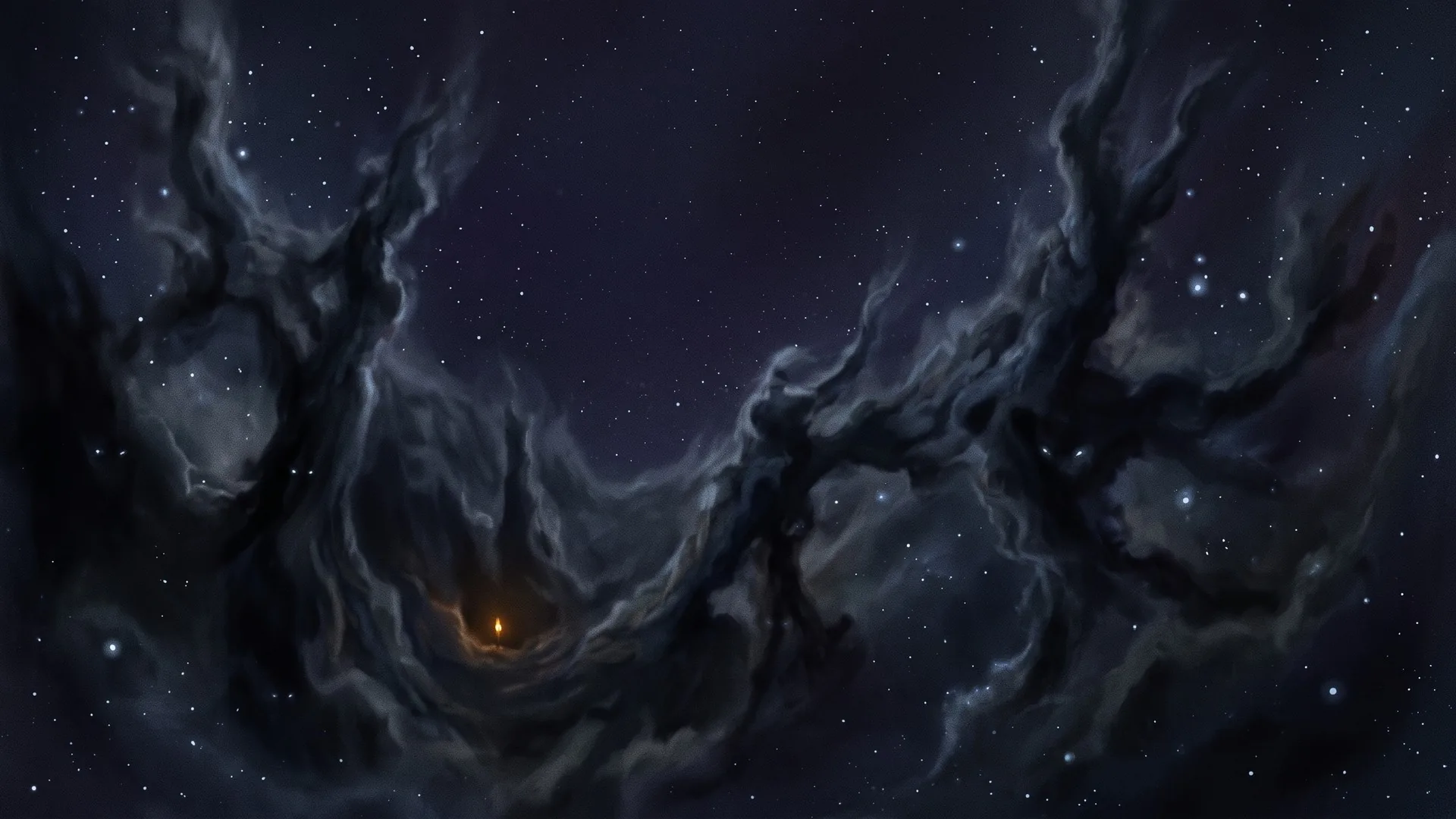
A hidden-information space 4X
Everything you build makes you louder. Loud civilizations get found.
“But where is everybody?”
The universe is 13.8 billion years old. It holds hundreds of billions of galaxies, each with hundreds of billions of stars, and most of those stars have planets. Life should be everywhere. We have listened for seventy years, and heard nothing.
Perhaps space is a dark forest: they are out there, and silent. No civilization can know whether another means it harm, and none can afford to ask: an answer takes centuries to cross the dark. So the wise ones hide. And when they see a light, they put it out.
“If aliens ever visit us, I think the outcome would be much as when Christopher Columbus first landed in America, which didn’t turn out very well for the Native Americans.”
How it plays
Two to four civilizations share a board of hexes and fog. Each grows, researches and arms out of sight of the others. The game is the referee: it rolls in private, and shows each player only what their own pieces have seen.
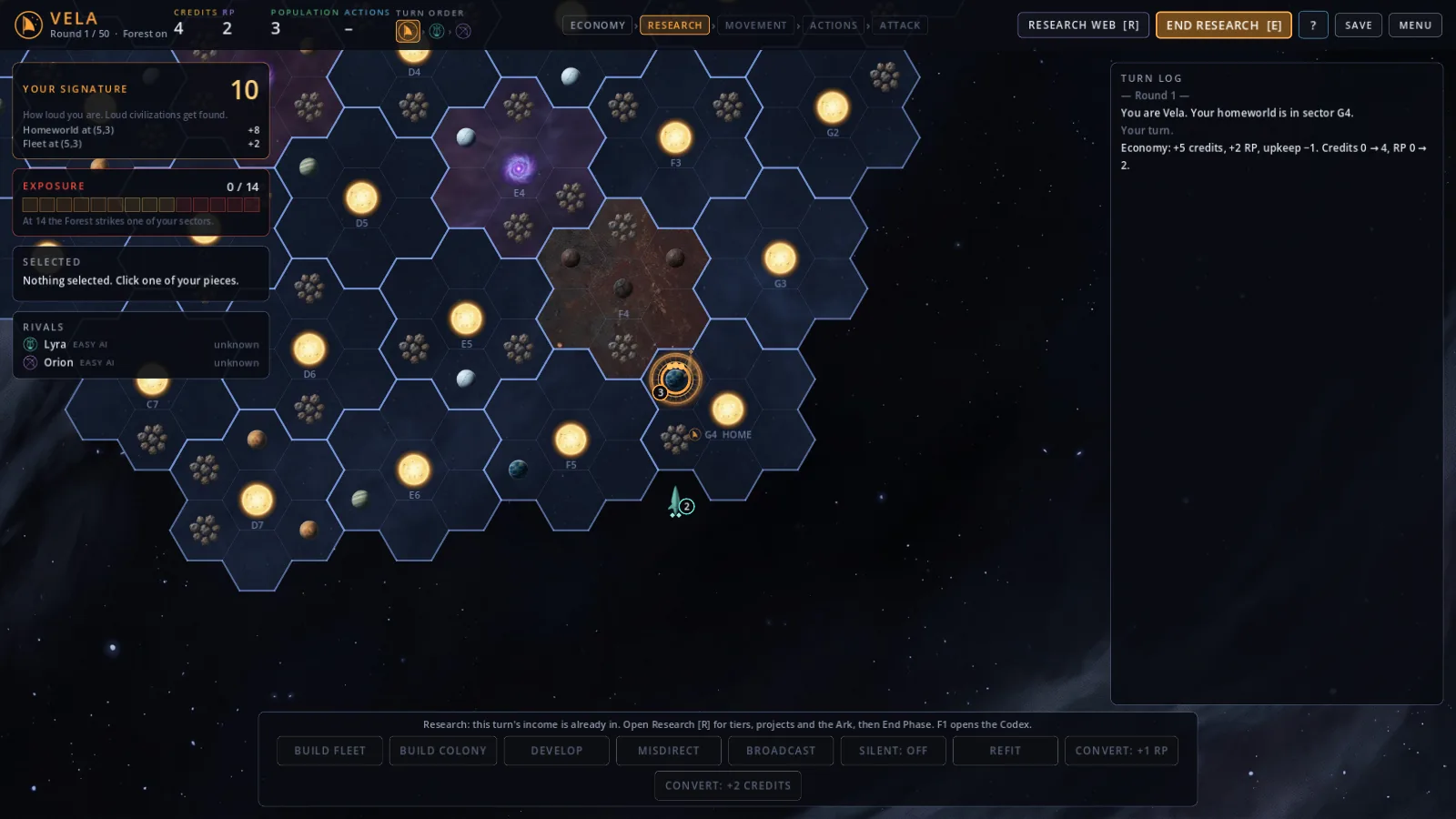
Every colony, every level of development and every fleet adds to your Signature. Expanding is how you get strong, and how you get found.
Detection rolls against the target’s Signature, so the quieter civilization usually finds the louder one first, and picks where the first fight happens.
Conquest favours the wide and loud. The Ark favours the tall and quiet, and it burns in public while it’s built. Each kind of player has a reason to hunt the other.
Combat is a single d6 on a results table. You see every possible outcome before you commit.
Stay loud for too long and something far older answers. One of your sectors is erased, and nothing in it survives.
Optional ruleVictory
Be the only civilization left with a colony.
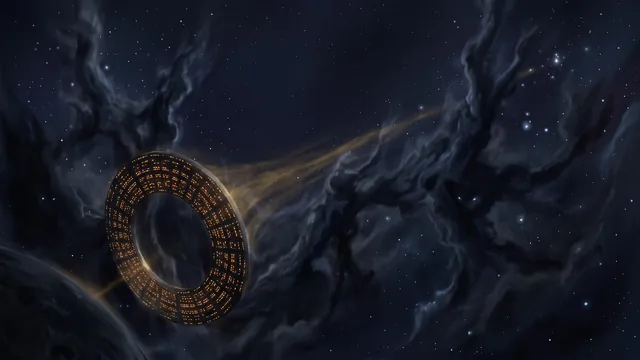
Finish the Ark and leave the forest before anyone reaches it. Every stage of it can be seen.
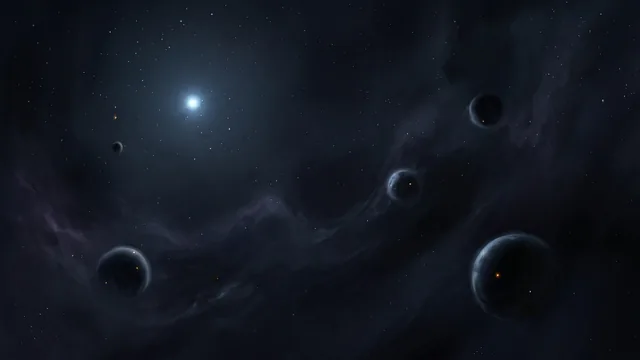
Last to the turn limit with the highest score. Five points more if no rival ever found you.
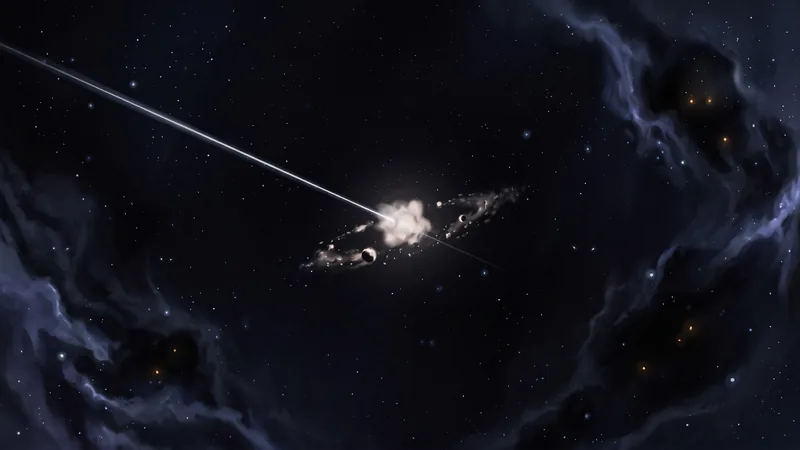 Optional rule
Destroy three rival colonies with weapons no one can trace, hold an Apex weapon, and stay unfound for five rounds.
The late game
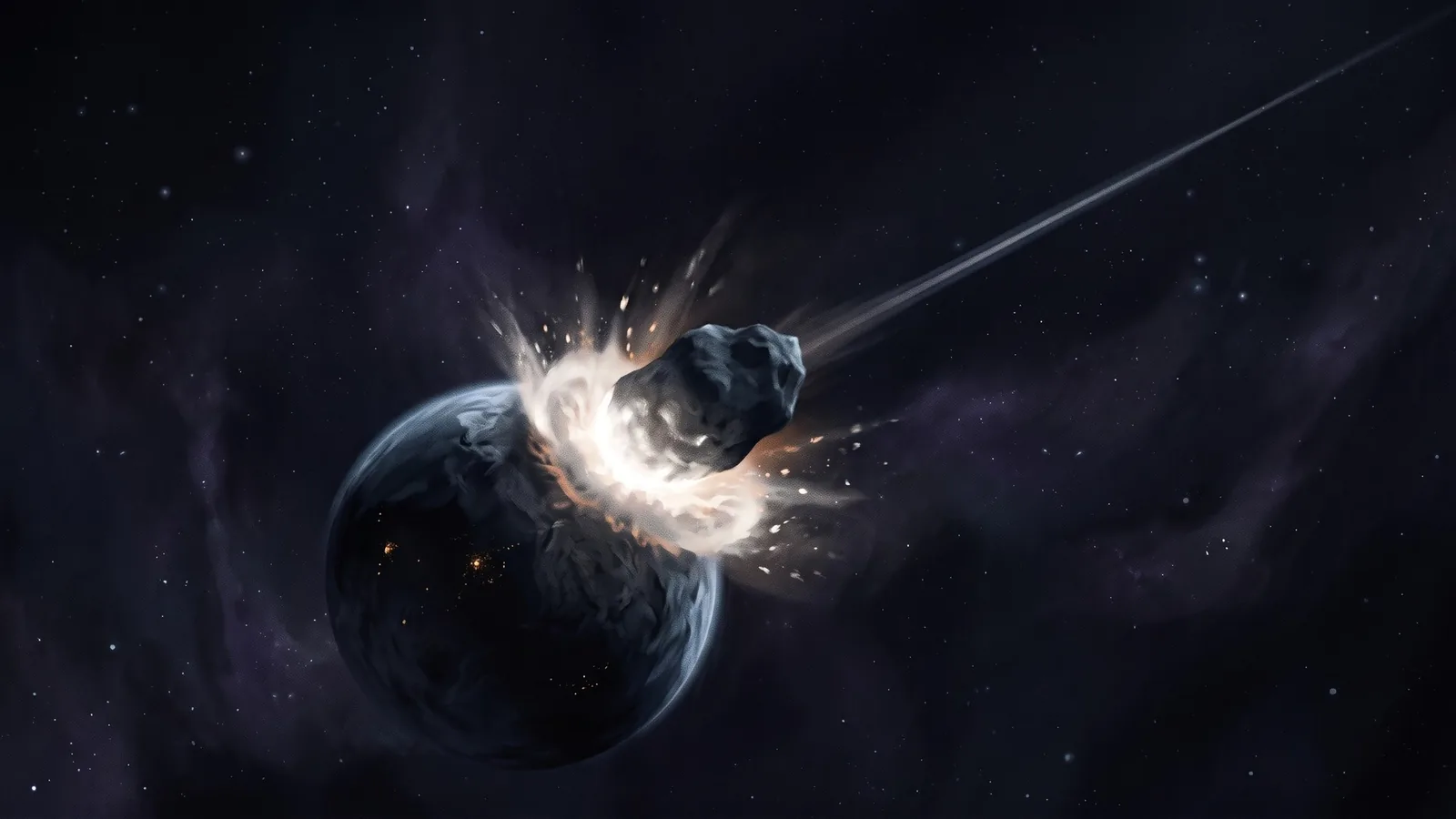
A fleet gives you away. Later, there are quieter ways to end a rival, and every one of them has an answer.
The players
Each is named for a constellation. On your screen, yours is the only warm light. Everyone else is cold.
Shown as you
Shown as a rival
Shown as a rival
Shown as a rival
From the opening story
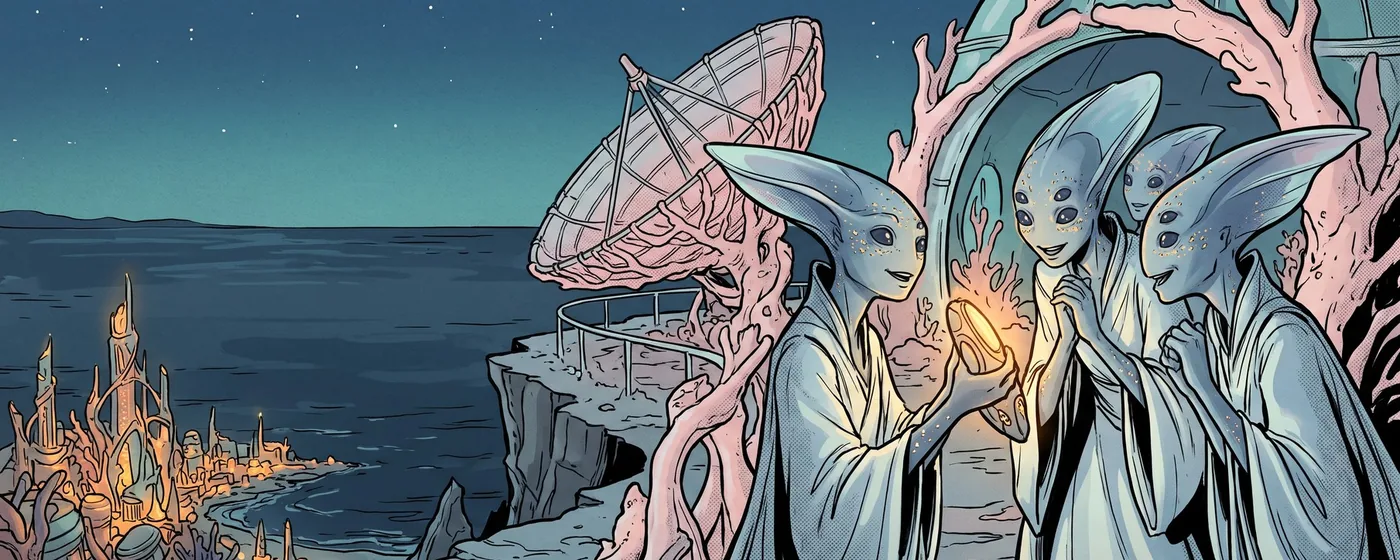
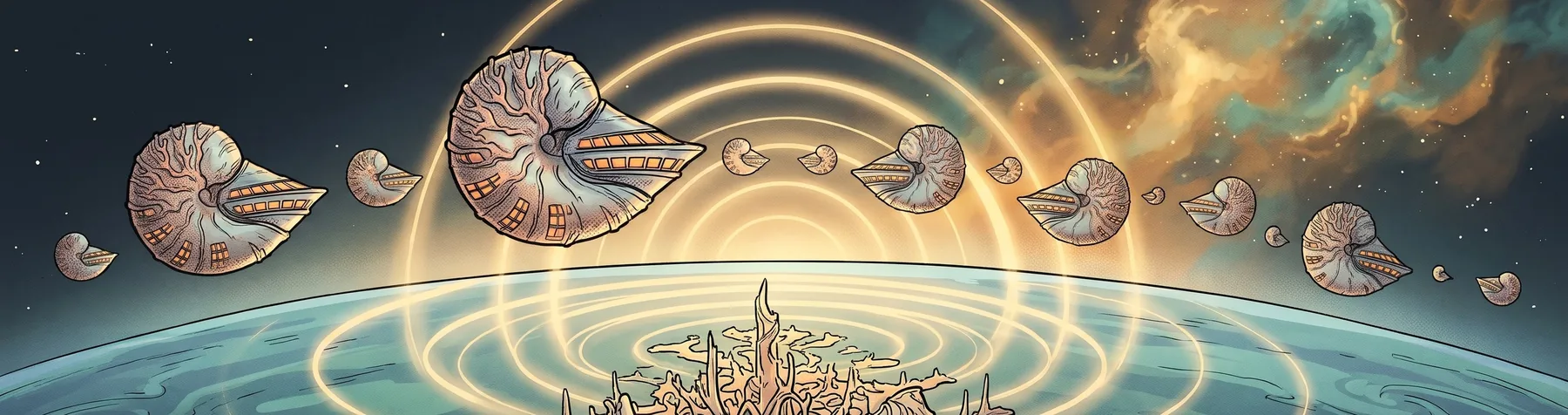
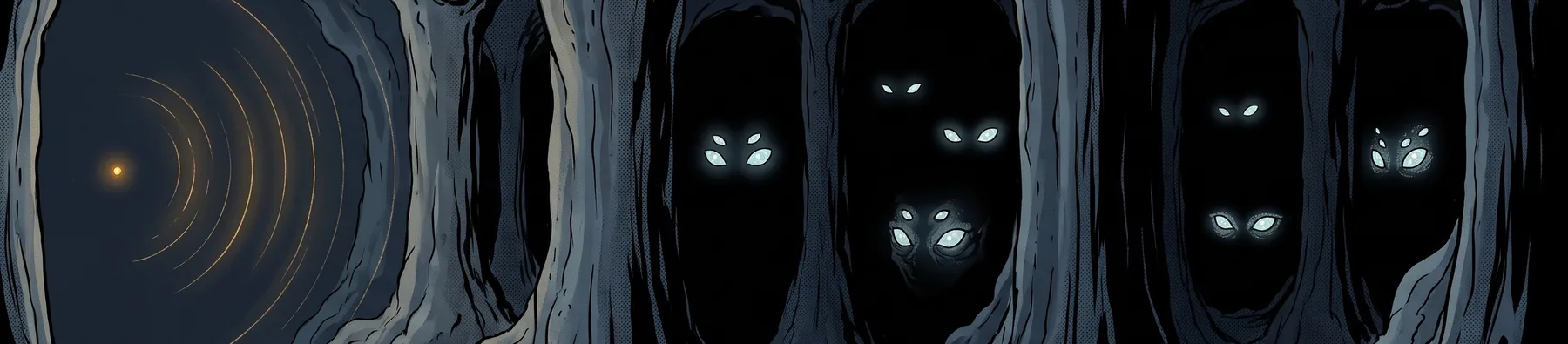
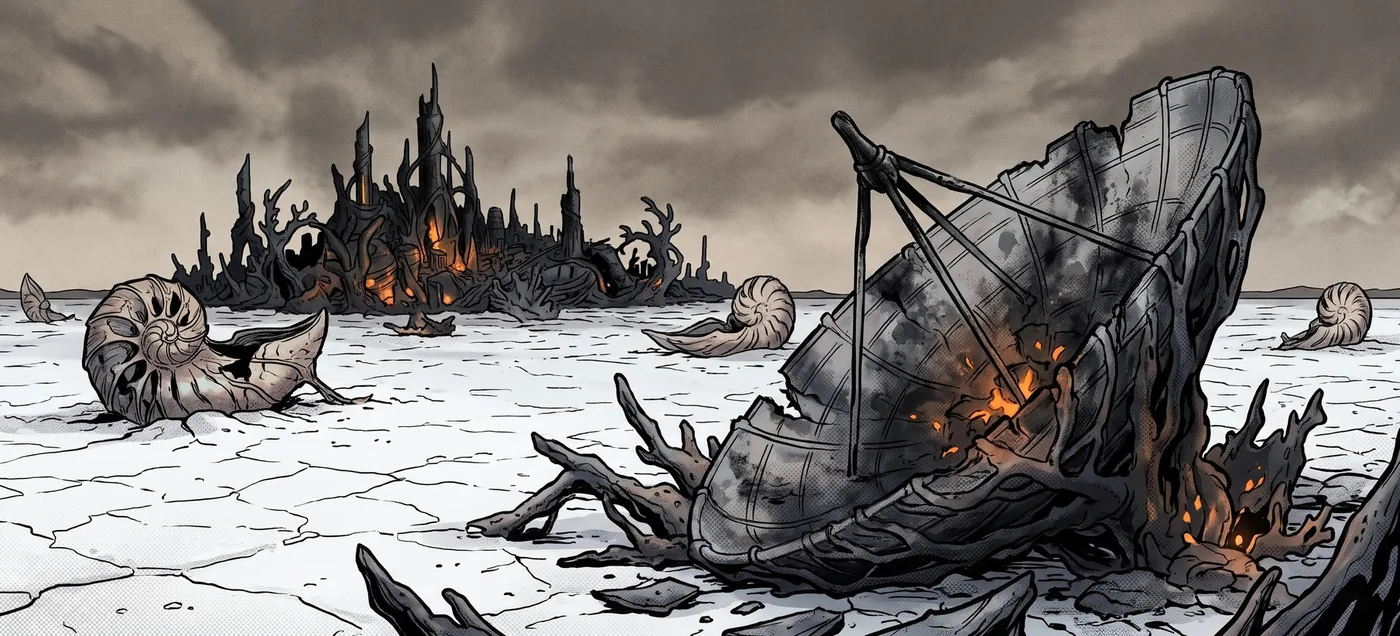
Four more civilizations tell their stories before the first turn.
Now it is your turn.
In development
A fix for the top bar: with the new ECONOMY button, MENU slid off the right edge of the screen at larger UI scales. ECONOMY is now the first step of the phase strip, and the bar tightens to fit at every UI scale the game allows.
Line fleets can now take a Shroud refit and cloak: unseen, they slip past pickets and call down rocks from next to their target. Inhibitor Arrays, buoys and Wake Sensors answer them. Also new: blind rock fire, point defense along a rock's path, cracked planets, capture nets, planned moves, and the Ark as an optional rule.
The research web now fills the screen without crowded labels, glows green on what you can afford, and pans with W A S D. Corvettes scout less freely. A dark civilization's Ark stages stay hidden unless a rival notices them. Ties are now settled by what each civilization built, never by seat.
Grow, and be heard. Hide, and be safe.
A few emails, no more: when the Steam page opens, when there’s a demo, and at launch.